Timeless Design with Vintage Garden Journal Pages
There is a distinct emotional resonance found in the textures of a well-loved garden journal. The combination of pressed leaves, faded sketches of blooms, and handwritten notes creates a visual language of patience and history. This specific aesthetic is precisely what the Vintage Garden Journal Pages kit captures. Unlike standard digital papers that often feel sterile or overly synthetic, these printable pages offer a tangible sense of antiquity. They function not just as a background, but as a foundational design asset that brings warmth, organic texture, and a narrative quality to creative work. For designers and creators, this kit provides a bridge between the digital workspace and the tactile charm of vintage ephemera.
The Visual Character of Botanical Junk Journaling
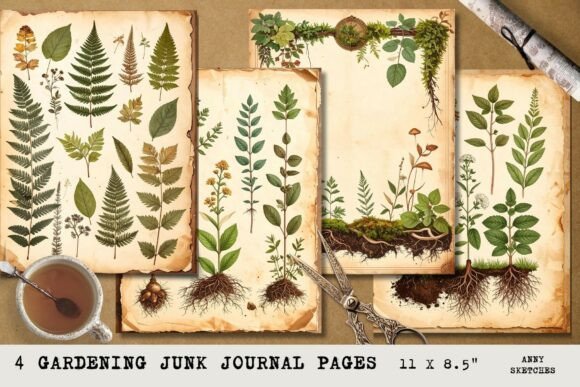
Understanding the visual personality of the Vintage Garden Journal Pages is key to utilizing them effectively. These are not merely abstract patterns; they are compositions inspired by historical botanical prints. The visual weight is balanced, utilizing soft, earthy tones—think muted sage greens, sepia browns, and faded ochre yellows. The illustrations feature delicate linework typical of antique scientific diagrams, yet they maintain an artistic looseness that prevents them from feeling rigid.
The "junk journal" style implies a layering of elements. These pages are designed to look like they have lived a life—perhaps sitting on a potting bench or tucked inside a library book. This distressed, organic texture is a powerful tool in modern typography. When you pair a clean, geometric sans serif font against these textured backgrounds, the contrast highlights the precision of the type while softening the overall look of the layout. Conversely, combining them with a script font or handwritten font enhances the romantic, personal nature of the project.
Strategic Applications for Branding and Design
While the immediate application for these pages is crafting, their utility extends far into professional brand identity and editorial design. In a market saturated with stark minimalism and high-gloss finishes, the "cottagecore" and "dark academia" aesthetics are seeing a significant resurgence. Brands that want to communicate authenticity, sustainability, or artisanal quality can leverage these textures to stand out.
Editorial and Publishing
For publishers and bloggers, these pages are invaluable for packaging design mockups or editorial layouts. Imagine a cookbook layout where the recipe text is overlaid on a subtle botanical background to evoke a farm-to-table ethos. Or consider a wellness brand’s web design where these textures serve as section dividers, breaking up content in a way that feels organic rather than clinical. The 300 DPI resolution ensures that the details remain crisp even when printed, making them suitable for physical print materials like planners, seed logs, or stationery.
Digital Presence and Social Media
In the realm of social media graphics, visual consistency is the currency of recognition. Using the Vintage Garden Journal Pages as a recurring background element for quote cards or promotional announcements creates a cohesive feed. Because the files are high-quality JPGs, they integrate seamlessly into tools like Canva, Photoshop, or Illustrator. This allows content creators to maintain a specific color palette and mood across their digital presence, reinforcing their brand identity with every post.
Technical Considerations and Pairing Strategies
Integrating a themed background kit into a professional workflow requires more than just dragging and dropping an image. It requires a thoughtful approach to readability and hierarchy. The Vintage Garden Journal Pages feature intricate details—leaves, vines, and flowers—which means text legibility is paramount.
Ensuring Readability:
When placing text over these botanical illustrations, you must manage the "noise" of the background. A common technique is to use a semi-transparent overlay or select areas of the page with less visual activity for your text blocks. The earthy tones of the kit work beautifully with dark charcoal or deep forest green text, providing enough contrast for legibility without the harshness of pure black.
Typography Pairings:
To maximize the impact of these design assets, consider your font choices carefully. The vintage aesthetic pairs exceptionally well with specific typographic styles:
- Serif Fonts: A classic serif font with high contrast (like a Didot or Garamond) mirrors the elegance of the botanical drawings. This is ideal for headers in editorial design.
- Sans Serif Fonts: A clean, geometric sans serif font offers a modern counterpoint. This prevents the design from looking "costume-y" and grounds it in contemporary modern typography.
- Display and Script: For logo design or feature headers, a display font or script font can capture the handwritten feel of a garden diary. However, use these sparingly to maintain readability.
Evaluating Fit and Licensing
Before committing to a creative font or background kit for a commercial project, it is essential to evaluate the fit. Ask yourself if the "handmade" personality of the Vintage Garden Journal Pages aligns with the brand voice you are building. For a tech startup, it might feel out of place; for a boutique skincare line, an herbalist, or a landscape architect, it is a perfect match.
Because this is a digital download, accessibility is immediate. However, for small business owners and designers using these for client work, checking the licensing is a standard professional courtesy. Ensure that the usage rights align with the scope of your project, particularly if the final output is a commercial product for resale. The versatility of these pages allows them to function as stationery, digital paper for scrapbooking, or backgrounds for product photography, making them a high-value asset in any creative toolkit.
Ultimately, the goal of using resources like the Vintage Garden Journal Pages is to tell a story. By combining these rich, historical textures with thoughtful typography and layout, you create an experience that feels curated, personal, and deeply connected to the natural world. Whether you are designing a wedding invitation, a product catalog, or a personal herbal journal, these pages provide the canvas for your story to unfold.